
Juvenile Center Release Paths
Scott County Juvenile Detention Center is a county-owned and county-operated youth facility. It is separate from the adult jail at the Justice Center. A youth may leave detention under juvenile court direction, be returned to an authorized custodian, or move within the juvenile justice system. The available research does not establish a public release feed, public roster, standard release hour, exit door, or open identity database for this center. Those gaps must remain gaps.
A release from one juvenile facility does not by itself describe the full legal status of the youth. The juvenile court order and the facility's authorized custody record serve different roles. The order may control placement or return terms. The facility record may document the movement. Only an office with authority over the case can explain which parts may be shared and with whom. Public adult-release methods should not be used to fill that confidential space.
| Question | Correct route | Route to avoid |
|---|---|---|
| Is a youth still held? | Authorized contact with the facility or juvenile court | Adult iSOMS current-inmate database |
| Was a youth released? | Applicable juvenile court and facility process | Adult 72-hour Intake/Release feed |
| May a record be disclosed? | Office holding the record under juvenile confidentiality rules | A general adult public-record assumption |
| Where did custody move? | Authorized inquiry to the responsible juvenile authority | TDOC FOIL unless a separate adult state record truly applies |
Confirm Juvenile Center Release
Start with authority, not a web search. A caller should know the youth's correct identity and relationship to the case, then ask the juvenile court or center what proof of identity and authorization is required. Staff may be unable to acknowledge custody, release, placement, or case information to a member of the public. That limit protects the young person and does not imply that no record exists.
An authorized inquiry can follow a restrained sequence.
- Contact the Scott County Juvenile Detention Center using its official phone number.
- State the lawful relationship to the youth without sharing extra case details in an insecure message.
- Ask which office controls release confirmation and what identification or authorization must be supplied.
- If directed to juvenile court, request only the case information the requester is entitled to receive.
- Follow secure delivery and redaction instructions from the custodian.
Scott County's adult iSOMS links are not an alternate juvenile channel. A failed adult search says nothing about youth custody. Tennessee Department of Correction FOIL is a felony-offender system for current or former TDOC custody or supervision, not a general juvenile locator. BOP and ICE systems likewise answer different custody questions. Use the system responsible for the juvenile case.
Juvenile Center Release Contact
The state facility material identifies the Scott County site and its county operation. This is the direct factual contact available in the research. It should be used by an authorized person to learn the correct process, not as an invitation to seek confidential information about unrelated youths.
Scott County Juvenile Detention Center
195 Firehall Drive, Suite 103
Huntsville, TN 37756
Phone: 423-663-3017
Operator: Scott County
The Tennessee Department of Children's Services juvenile facility material provides official statewide context. Its facility listing is also the source for the captured image below. The screenshot confirms the juvenile-system setting rather than supplying a public identity or release result.
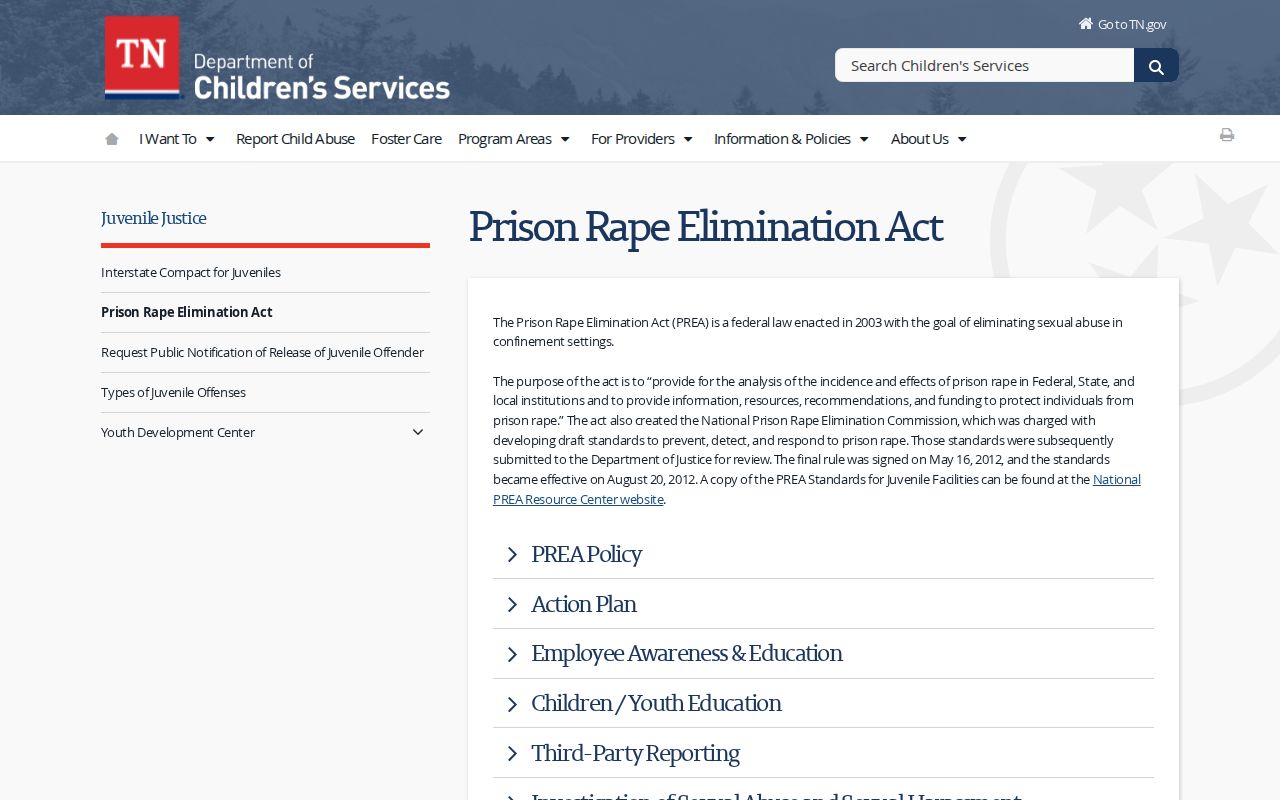
The image belongs with facility identification only. It must not be read as a public roster, proof of a specific youth's custody, or evidence that a youth was released.
Scott Juvenile Facility Records
Official state compilations describe the center as a 12-bed juvenile detention facility. Capacity is a facility fact, not a count of current youth, annual admissions, or releases. It does not support a claim about who is present on any day. The number should never be combined with the adult Justice Center census because the sites serve different populations and record systems.
Confidentiality changes both access and publication. An adult jail register may contain open fields subject to Tennessee law, while juvenile information can have distinct statutory limits. A public-record request does not cancel those limits. If an office withholds or redacts information, the requester can ask which rule controls and whether a nonconfidential portion is available, but should not seek to reconstruct a youth's identity through several partial sources.
- Juvenile detention
- Short-term secure custody within the youth justice system, separate from an adult jail.
- Authorized person
- Someone whose legal role permits access under the court or agency's rules.
- Custodian
- The office that maintains the requested record and decides access under law.
- Redaction
- The removal of protected content while any lawful portion is considered for release.
Juvenile Versus Adult Release
The Scott County Justice Center adult jail publishes a 72-hour Intake/Release view and a name search with a Released control. Those are adult channels. The Juvenile Detention Center has no comparable public channel established in the research. Linking the two because both are in Scott County would create a false and potentially harmful impression.
If the person is an adult held at the Justice Center, use the Sheriff's official route and request the booking and release record. If the person is under juvenile jurisdiction, contact the juvenile facility or court as an authorized party. If a case later results in a separate adult TDOC record, that record must be confirmed on its own terms and not used to expose earlier confidential juvenile events.
The distinction also applies to images. A public adult booking photograph, where lawful and retained, is not a model for youth publication. No juvenile photo should be captured, displayed, or sought for an adult released-inmate gallery. The facility-list image shown here displays an official source interface, not a person.
Note: A missing adult search result cannot confirm release from, admission to, or transfer through the juvenile center.
Request Juvenile Release Records
A narrowly framed request reduces needless disclosure. Identify the document or decision needed, the requester's authority, and a secure way to respond. An authorized parent may need practical release instructions. Counsel may need an order or placement record for legal process. A government office may need an agency-to-agency confirmation. These are not the same request, and the responsible office can route each one.
Do not ask Scott County's general Public Records Coordinator to create a released-youth list. Tennessee public-record rules concern existing records and do not require a custodian to compile a new report. More important, juvenile confidentiality may bar release even when a similar adult field is public. The facility or juvenile court can state whether the request belongs there, with DCS, or with another custodian.
If access is allowed, use the record only for the permitted custody, family, notification, or court purpose. Keep it off public posts and adult roster pages. Share it through the secure channel set by the court or agency, and seek correction from the originating office if an authorized record is inaccurate.
Different offices may hold different parts of the matter. The detention center may control a custody movement, while the juvenile court controls the order that authorized it. DCS may have a role in a case without becoming the custodian for every county record. Ask the first responsible office to identify the proper custodian when it cannot answer. Do not send the same youth's private details to a broad list of agencies. A narrow request, secure reply method, and verified recipient reduce the risk of exposing confidential information while preserving the authorized person's ability to act.
Scott Juvenile Search Limits
Several official systems can look relevant while answering the wrong question. Scott County iSOMS concerns the adult jail. FOIL concerns Tennessee felony offenders in or formerly under TDOC custody or supervision. VINE is a notification and custody-information service whose Scott County jail participation was not independently confirmed in the research. The BOP locator concerns federal custody, and ICE ODLS concerns immigration detention. None is a substitute for the juvenile court or center.
The practical endpoint is direct, authorized contact. Confirm the office, prove the relationship when asked, and follow the rules attached to the case. If staff cannot disclose a status, do not treat silence as evidence of release. The Scott County released-inmate search is reserved for the public adult and corrections routes it describes. If a lawful juvenile order or notice is supplied, read it for the exact custody action and effective terms. That method protects the youth while giving authorized people the most reliable answer available.