
ICE Detention Release Paths
No Scott County ICE detention facility or holding contract was established in the official research sweep. The facility entry represents the nationwide Immigration and Customs Enforcement detention system. It should be used only when immigration custody is plausible from a county release disposition, court record, family knowledge, or another reliable source. The absence of a verified local contract does not prove that a temporary interagency transfer can never occur.
A person may move from Scott County custody to ICE, remain detained, or later leave ICE detention under immigration authority. “Released to ICE” in a county record means Scott County custody ended through a transfer. It does not mean release to the community. ICE release paperwork can then state check-in requirements or another obligation, which is separate from immigration court.
| Event | Custody meaning | Record to use |
|---|---|---|
| Scott release to ICE | County custody ended; immigration custody may begin | County release disposition and receiving authority |
| Current ICE detainee result | ICE reports present detention | ODLS and facility contact |
| Recent ICE release result | ICE custody ended within the locator's limited window | ODLS plus release paperwork |
| Required ICE check-in | Reporting duty after detention | Release documents and ICE check-in instructions |
Search ICE Release Records
The Online Detainee Locator System, or ODLS, offers two searches. The first uses an A-number and country of birth. The A-number must contain exactly nine digits, so leading zeroes must be added when needed. The second uses exact first and last names, country of birth, and an optional date of birth. Preserve spelling and hyphens. Minors are excluded from public results.
Use the system carefully.
- Choose the A-number route when the verified immigration identifier is known.
- Pad the number to nine digits and enter the correct country of birth.
- For a biographical search, use exact names and country of birth, then add date of birth if available.
- Compare the returned identity before reading the custody location or release status.
- Contact ICE or the listed detention site when a current result needs confirmation.
- Save lawful release paperwork and compare it with the Scott County transfer record.
The official ICE locator scope is documented in the captured image below.
The source supports the current and recent-release window. It does not establish a Scott County detention agreement or a person-specific result.
ICE Detainer Release Transfers
An ICE detainer is a request for advance notice and up to 48 additional hours so ICE can assume custody. It is not proof that pickup occurred. The Scott County jail record should identify whether custody actually ended and whether ICE or another agency received the person. Ask for the release disposition and receiving-authority field instead of relying on the fact that a detainer was mentioned.
The ICE detainer explanation shown below supplies the federal context for an interagency handoff.
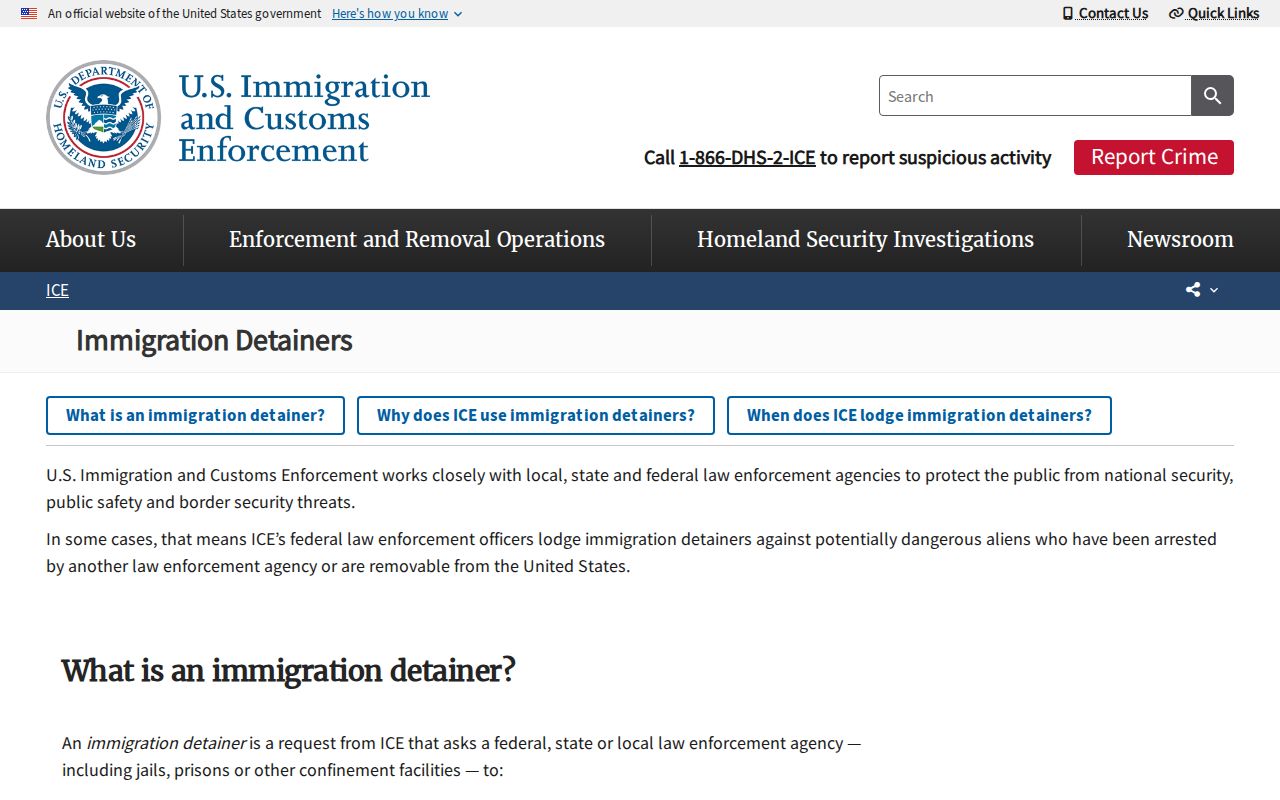
The screenshot explains the request mechanism. The actual Scott County booking and release record remains the source for whether a handoff happened in a particular case.
Timing matters. A Scott iSOMS release date establishes the end of local custody, while an ODLS record may establish later ICE custody or a recent ICE release. These can be different dates. If the person does not appear in ODLS, check exact spelling, country of birth, and A-number. Then call the official information line. An absence after the limited released-person window has little archival value.
ICE Release Information Contact
The ICE Detention Reporting and Information Line is the documented phone route for detention questions. Language assistance is available. Because no Scott-specific ICE facility was verified, the federal line and ODLS are the correct general contacts rather than an invented local address.
ICE Detention Reporting and Information Line
Phone: 888-351-4024
Hours: Monday through Friday, except holidays
Time: 8:00 a.m. to 8:00 p.m. Eastern
Coverage: ICE detention information and assistance
Have the exact name, A-number if known, country of birth, date of birth, and likely transfer date available. Do not provide extra private information through an unofficial channel. If ODLS names a facility, confirm that site's official contact before asking for current custody or release procedures.
- A-number
- An immigration file number used for the most precise ODLS search.
- ODLS
- ICE's Online Detainee Locator System for current and recent detention information.
- Detainer
- An ICE request for notice and limited extra time so a custody transfer can occur.
- Check-in
- A reporting requirement after detention, separate from an immigration court hearing.
After an ICE Release
Leaving ICE detention may come with a scheduled ICE check-in. The released person should use the instructions in the actual release documents and the official ICE check-in information. A check-in is not the same as an immigration court hearing. Missing one appointment does not tell a reader what happened in the other process.
Release paperwork controls the next practical step. It can identify the reporting office, time, and conditions that apply to the person. General web text cannot replace those papers. Keep copies of the release document, county transfer entry, and later notices. Together, they create a clearer record of the movement from Scott County custody, through ICE if applicable, and out of ICE detention.
The public check-in source is represented in the source capture below.
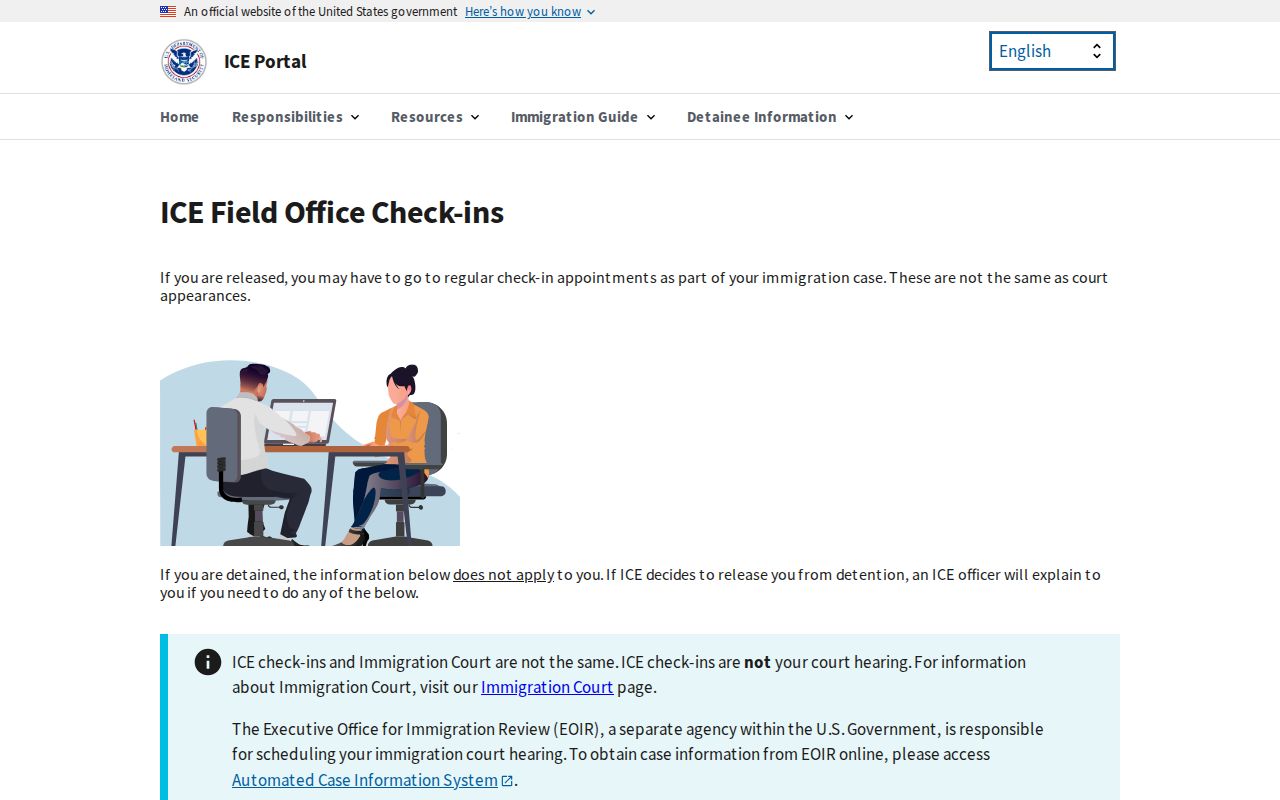
The image supports the post-release reporting route. It does not reveal a person's required appointment or replace individual ICE paperwork.
Note: An ICE release can end detention while immigration proceedings or reporting duties remain active.
Confirm Scott County ICE Release
Begin with the Scott County record when the sequence starts at the Justice Center. The official 72-hour Intake/Release page and Released name search can identify the local event. If details are missing, ask the Sheriff for the actual date and time, release disposition, and receiving agency. The Scott County Justice Center release page gives the local record path.
Next, use ODLS promptly. A current detainee result confirms ICE custody at the time of the search. A recent released-person result confirms that ICE custody ended within the stated window. Neither result explains every legal condition. The person's release papers and immigration case record provide the next layer.
Do not convert a blank search into a conclusion. A misspelled name, incorrect country, omitted zero, excluded minor, data delay, or expired visibility window can all prevent a result. Call ICE and use the appropriate legal or records process when the locator is inconclusive.
ICE Release Locator Limits
ODLS is a short current and recent-release tool. It is not a Scott County roster, a BOP locator, a USMS history, or a permanent immigration archive. Each of those systems covers a different custodian. A person transferred from the county to ICE may disappear from the local current database before appearing in an immigration search, so source times should be recorded.
No official sweep established a local ICE contract, standard Scott County ICE pickup pattern, or fixed release destination. Those facts cannot be borrowed from another county. The supported route is conditional: when the Sheriff or case record indicates ICE, verify the local handoff, search the federal locator, and retain the later immigration release record.
The 60-day ODLS scope also changes the old-record strategy. A current search should be saved with its search date and matched identifiers when lawfully obtained. After the recent-release window closes, rely on release paperwork, immigration case material, the ICE information line, and any lawful agency record rather than claiming that a blank locator erases the event. Minors do not appear in ODLS, so their absence has a separate built-in explanation. None of these limits expands public access to protected information.
A complete account states which agency released the person and when. “Released from Scott County to ICE” and “released from ICE” are separate claims. The Scott County release records search provides the broader local-to-federal path. Naming both events prevents a transfer from being mistaken for community release and keeps the record tied to the government office that created it.
Identity checks are especially important in the biographical search. Exact names, country of birth, and date of birth should be compared before an ICE result is attributed to a person. The A-number route is more precise, but even it requires the correct country and nine-digit formatting. Keep leading zeroes. Do not guess a country, alter a hyphen, or merge two similar results. When data conflicts with the person's papers, use the official line and the case record to resolve it.
Release from ICE detention does not by itself close the immigration case. Check-in duties and immigration court dates arise through different systems. The person should follow each notice and obtain qualified legal help for legal advice. The custody record answers the detention event; it does not predict the outcome of immigration proceedings.